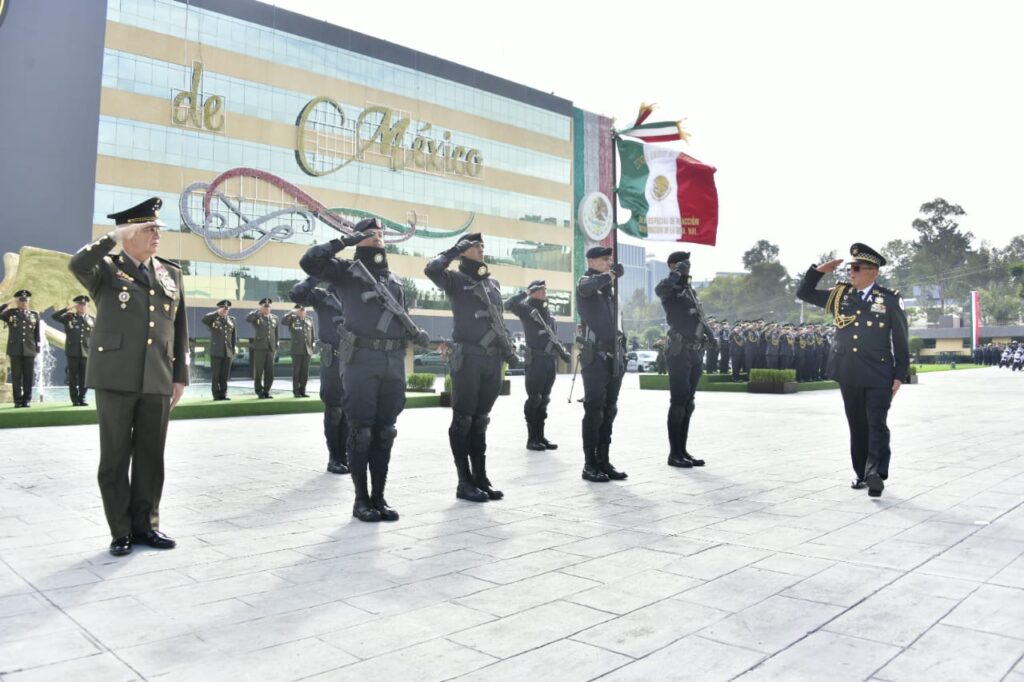

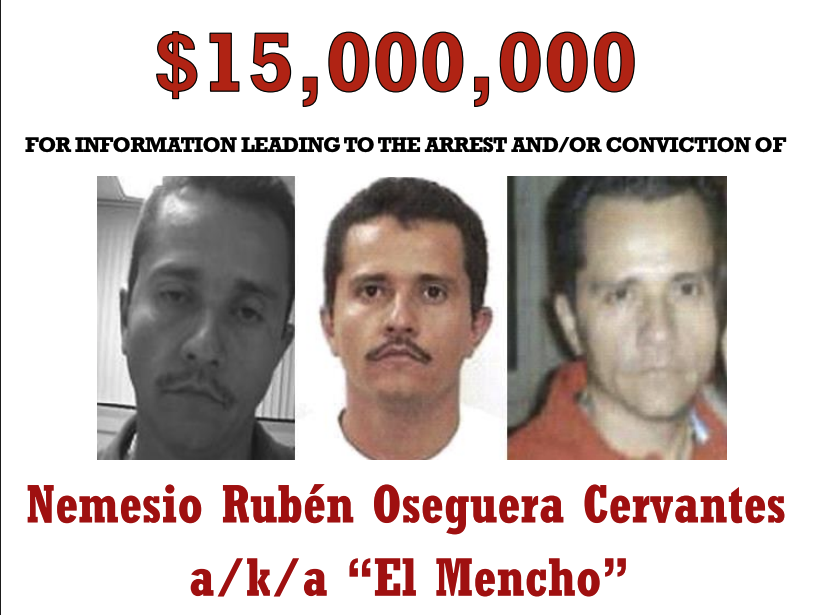
The Mexican military on Sunday confirmed the death of Jalisco New Generation Cartel (CJNG) leader Nemesio “El Mencho” Oseguera, setting off a wave of cartel violence in western cities like Guadalajara and Puerto Vallarta.
Videos circulating on social media showed burning buses, stores and vehicles, and authorities Sunday identified 250 roadblocks across 20 states, with much of the violence concentrated in Jalisco, the cartel’s stronghold and the state where “El Mencho” was killed.
Tourists sheltered in their resorts for hours and flights to Guadalajara and the popular tourist destination of Puerto Vallarta were cancelled on Sunday.
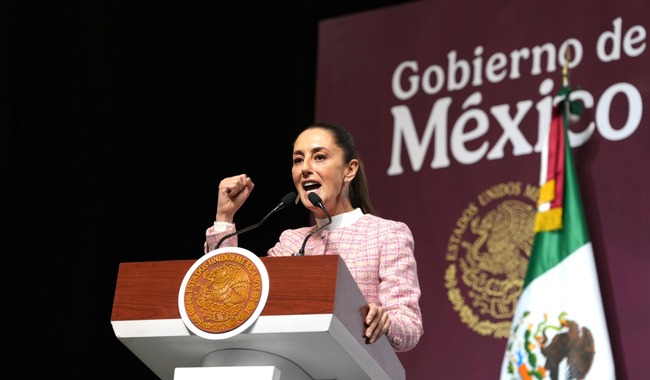
On Monday, President Claudia Sheinbaum addressed Mencho’s killing and the resulting violence and said that all of the roadblocks had been lifted.
“Today it’s more calm. There’s the presence of the government, the military, the security cabinet and a lot of coordination. So, you can be assured that we’re safeguarding peace and security,” said Sheinbaum during her morning press briefing.
A pattern of violent backlash following high-profile kills or captures
Mexican drug cartels sometimes inflict violence upon the public following the killing or capture of high-ranking cartel operatives.
In 2019, Culiacán, the capital of Sinaloa, erupted into violence following an operation to arrest Ovidio Guzmán-López, the son of jailed Sinaloa Cartel co-founder Joaquín “El Chapo” Guzmán Loera. At the time, President Andrés Manuel López Obrador released the cartel leader in order to avoid bloodshed. The younger Guzmán was arrested again in 2023 and later extradited to the United States.
Elijah Glantz, a research fellow at the Organised Crime and Policing Team (OCP) of the Royal United Services Institute, a defense think tank, told Latin America Reports that the “immediate lash out” on Sunday happened for two reasons.
The first is to “demonstrate to people internally in terms of rivals or internal potential opportunistic groups that the CJNG is still very strong and still has the capacity to inflict damage … And to the government, it’s the same. If you continue this path of trying to go after leaders, there will be a political, economic and human cost to your operations,” Glantz said.
The strategy to remove the CJNG head — taken amid mounting pressure on Sheinbaum by the Trump administration to combat drug cartels — has drawn criticism from some analysts who fear it could plunge Mexico back into its bloody war on drugs which has taken hundreds of thousands of lives.
Read more: Mexico’s ‘War On Drugs’ is officially over, according to president
Alexander Aviña, an associate professor of Latin American history at Arizona State University, wrote on X that the so-called “kingpin” strategy — which focuses on decapitating criminal structures by killing or capturing their leaders — “has been extremely successful in intensifying the levels of violence on the ground in Mexico … while the illicit drugs continue to flow north, and the military-grade weapons flow south.”
Chris Dalby, the director of World of Crime, which publishes reports on drug cartels, said,
“The ‘kingpin strategy’ has finally claimed its biggest scalp in a decade, but for Mexico, this is no victory. It is the beginning of a fragmentation that may break every record for violence.”
Trump administration officials, however, praised the Mexican military’s actions. U.S. Ambassador to Mexico Ronald Johnson said “this operation underscores a clear reality: criminal organizations that poison our people and threaten our nations will be held accountable.”
According to Glantz, efforts by cartels to use violence to force a period of “détente” between themselves and the Mexican State have worked in the past, but given Trump’s penchant for the kingpin strategy, it’s unclear how Sheinbaum will react.
“For Donald Trump, this is the kind of result he likes,” said Glantz. “It has nothing to do with reducing the amount of drugs or reducing the amount of criminality in Mexico, rather, it’s just a big name and a big success.”
In February of last year, the U.S. designated the CJNG a Foreign Terrorist Organization (FTO) and Trump has repeatedly threatened attacks on cartels inside Mexican territory — warnings that Sheinbaum has pushed back on.
Still, the attack on El Mencho — which resulted in the deaths of over 70 cartel members and security forces — could be a “political win for Sheinbaum vis-à-vis the current moment of bilateral relations with President Donald Trump,” David Mora, a senior analyst for the International Crisis Group, told Latin America Reports.
He said that with this operation, “Sheinbaum reclaims sovereignty and reclaims that Mexico can do it [handle attacks on drug cartels] itself, with cooperation from the U.S. of course.”
Glantz, however, believes the pressure remains on Sheinbaum to produce more of these results. “The question is, if she’s pushed to continue to produce those results and these operations, well then the CJNG might be more incentivized to exact a greater political toll,” he added.
Featured image: Screenshot of U.S. Department of State reward poster for El Mencho.
Featured image credit: U.S. Department of State